Lean Development Workshop
A Two-Day Workshop for Product Teams
Lean thinking starts with customers; it explores how an organization delivers value to those customers by solving their problems. Lean is about probing the value stream that begins with a customer need and ends when that need is addressed, looking for inefficiencies and opportunities for improvement. The purpose of this workshop is for teams of attendees to examine a typical software-intensive value stream, identify its biggest constraint, and learn how to challenge that constraint.
During the first day, we look at the real work of the teams attending the workshop.
Groups of 5-7 attendees develop value stream maps and then critique the maps by discussing questions such as:
- How do team members know what to do?
- How long does it take to solve a typical customer problem?
- What are the biggest sources of friction in the flow of value to customers?
On the second day, we discuss how lean principles can improve workflows,
covering topics such as:
- What genuine efficiency means and how to become more efficient?
- How can teams make and keep reliable promises in the face of uncertainty?
- How to keep code bases stable and reliable, especially as they grow large.
- Modern system architectures and why they are critical for reliability and flow
- How to create a work environment that attracts the best software engineers
Finally, each group creates a vision of the future (a year or two away) in which lean principles have been used to improve their value stream. They identify a critical first step in moving toward that future vision, and sketch a “getting started” action plan.
Learn from the Experts:
Learn first-hand from thought-leaders Mary and Tom Poppendieck how to reframe your software development process from the perspective of lean principles. Mary and Tom have pioneered the application of Lean Thinking to software development and documented their principles in books (below).
This two-day workshop is offered either privately or through partners who sponsor a public workshop. For additional information on the Leader's Workshop please contact us at info@poppendieck.com.
Agenda
Day 1
Value Stream Walk
- The Efficiency Paradox
- Breakout: A Hunt for Inefficiency
Value Stream Discussion
- Learning to See:
-- Friction in the Customer Journey
-- Friction in the Workflow
-- Friction in the Product
Day 2
The Efficient Organization
- Building the Right Product
- Making Reliable Promises
- Breakout: Measuring Performance
The Technical Heart of Agile
- Deployment Pipeline
- Architecture for Large Scale Systems
- Breakout: Visualize the Future
Software Engineering
- From Delivery Teams
to Problem Solving Teams - The Responsible Engineer
- Breakout: What to do Tomorrow
Books
- Ask the Right Questions
- Results are Not the Point
- Concept to Cash
- An Agile Toolkit
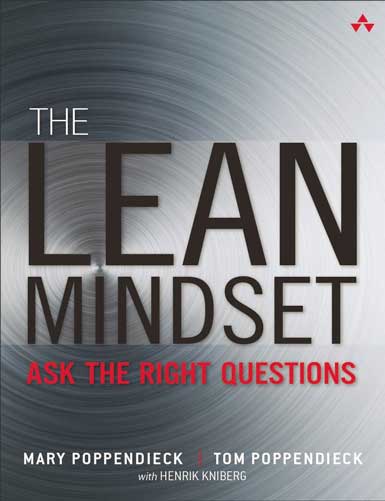
The Lean Mindset:
Ask the Right Questions
What company doesn't want energized workers, delighted customers, genuine efficiency, and breakthrough innovation? The Lean Mindset shows how lean companies really work, and how a lean mindset is the key to creating stunning products and delivering amazing services.
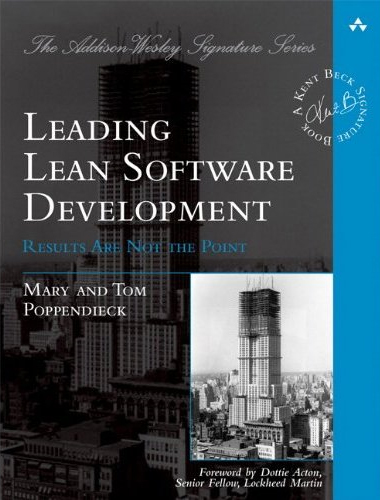
Leading Lean Software Development:
Results are not the Point
Building on their breakthrough bestsellers Lean Software Development: Concept to Cash and Implementing Lean Software Development: An Agile Toolkit, Mary and Tom Poppendieck's latest book shows software leaders and team members exactly how to drive high-value change throughout a software organization – and make it stick.
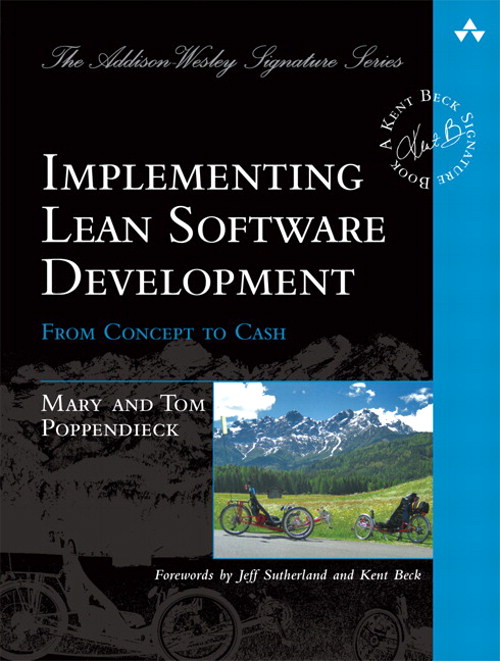
Implementing Lean Software Development:
From Concept to Cash
This book draws on the Poppendiecks' unparalleled experience helping development organizations optimize the entire software value stream. You'll discover the right questions to ask, the key issues to focus on, and techniques proven to work. The authors present case studies from leading-edge software organizations, and offer practical exercises for jumpstarting your own Lean initiatives.
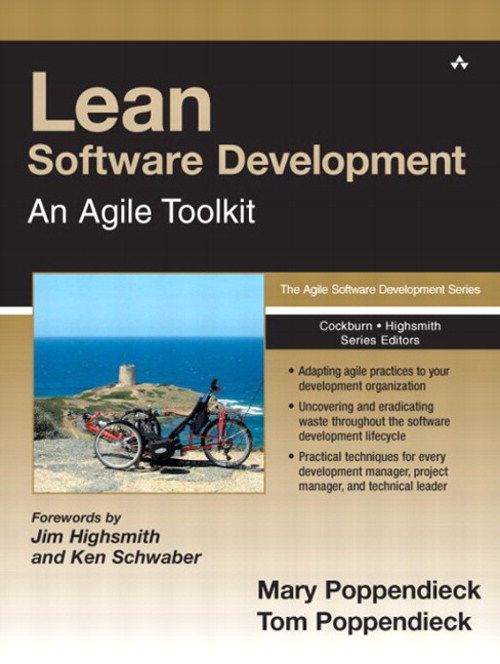
Lean Software Development
An Agile Toolkit
Lean Software Development shows software professionals how to achieve breakthrough quality, savings, speed, and business value by adapting the seven "lean" principles that have already revolutionized manufacturing and R&D. Drawing on 25+ years' experience leading enterprise projects, the authors show how to use these principles to create agile processes that work - because they're optimized for your environment.